


The Quiet Hunger Beneath the Appetite
We live in a time of unprecedented abundance: shelves full, choices endless, food always within reach. And yet, for many, something still feels missing.
Meals can be quick and convenient, but strangely unsatisfying. Eating becomes functional rather than relational. We are fed, but not always nourished.
Beneath conversations about organic labels, superfoods, and sustainability lies a quieter hunger: a longing to feel connected to what sustains us. To know where our food comes from. To feel the seasons again, not just on a calendar, but in our bodies.
Foraging is re-emerging within this longing – not as a survival tactic or fashionable hobby, but as a gentle response to disconnection. A way of stepping outside, slowing down, and remembering that nourishment has always been a relationship between land and people.
To forage is to bend down.
To look closely.
To listen to what the land is offering, rather than demanding what we want.
When Convenience Stops Nourishing
The renewed interest in foraging doesn’t arise in isolation. It sits alongside rising food costs, growing distrust in industrial food systems, and widespread concern about pesticides, ultra-processed foods, and opaque supply chains.
For many people, the question is no longer simply what we eat, but how our food lives before it reaches us.
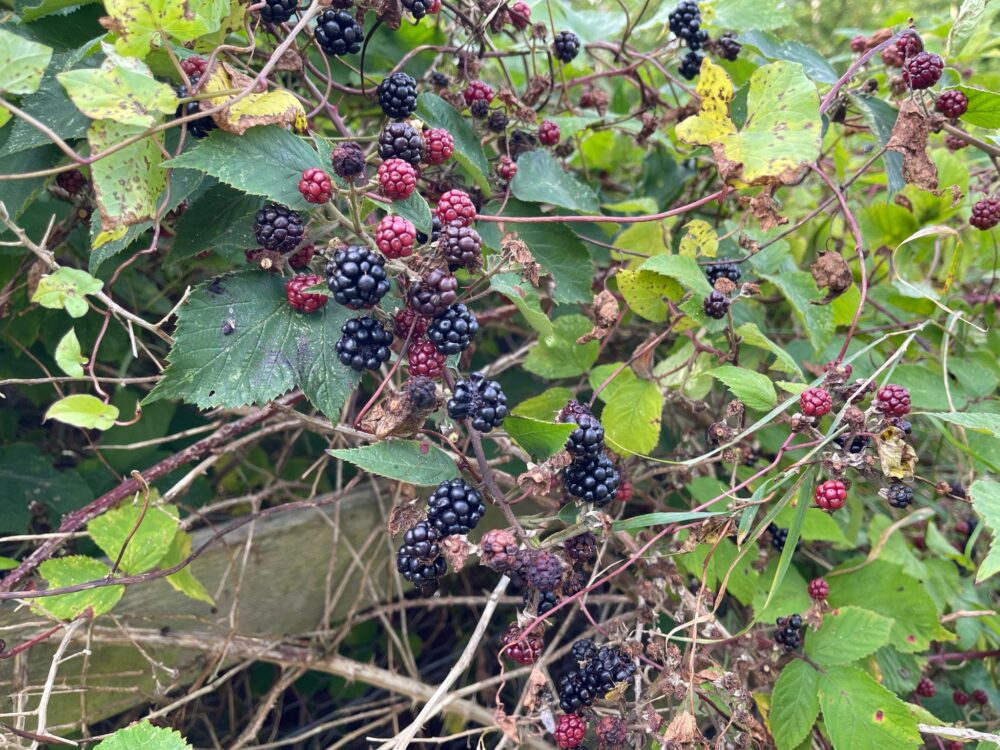
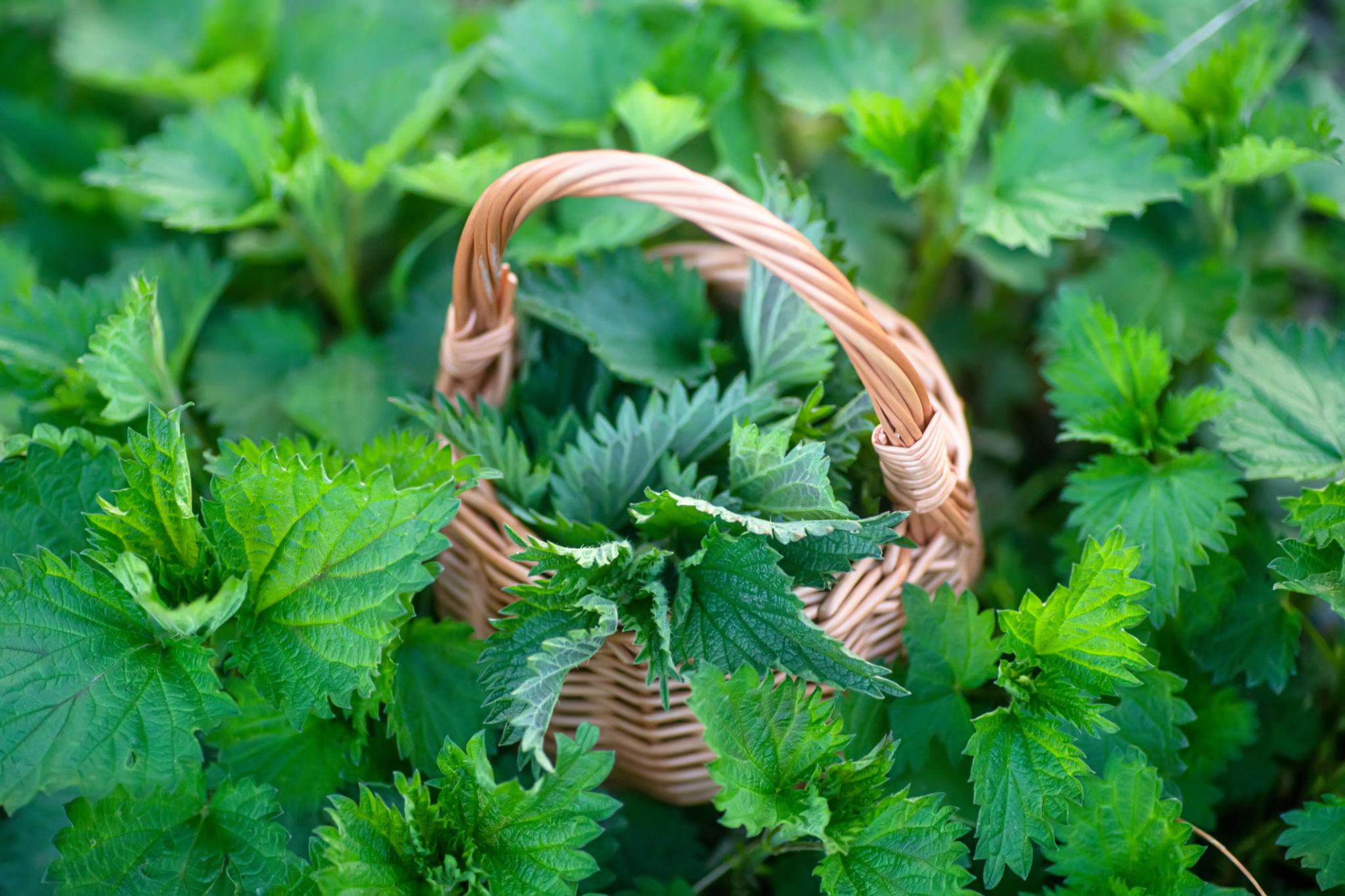
Local walks, familiar woods, and everyday paths have become places of rediscovery. People notice – sometimes for the first time – how much grows quietly at the edges of daily life. Nettles returning each spring. Blackberries heavy in late summer. Leaves, roots, and berries following rhythms far older than supermarkets or global logistics.
Foraging answers a modern fatigue with endless choice. Wild food does not offer everything, all the time. It offers what is here, now. That limitation is part of its teaching.
Rather than convenience, it offers attentiveness.
Rather than control, it offers participation.
The Benefits of Foraging (Beyond Free Food)
It’s easy to assume that the appeal of foraging lies in access to free ingredients. But those who practise it regularly describe deeper, more lasting benefits.
On a physical level, many wild plants are nutrient-dense, often rich in minerals, fibres, and bitter compounds that are less common in modern diets. This diversity can help reawaken taste: not just sweet and salty, but complex, grounding flavours that remind the body of variety.
Equally important are the mental and emotional effects. Foraging naturally slows the nervous system. It anchors attention in colour, texture, scent, and movement. Without calling itself “mindfulness,” it quietly invites presence.
There is also a gentle confidence that comes from learning to recognise even a handful of plants. The landscape becomes less abstract and more intimate. You begin to walk differently, noticing edges, soil, light, and season.
Foraging doesn’t require special equipment or athletic effort. It offers movement, fresh air, and a sense of agency around nourishment, without the pressure or performance often associated with wellness routines.
In this way, it feeds both body and mind.
Not Control, but Relationship
Foraging invites a fundamentally different relationship with organic eating.
Wild food is free from fertilisers, pesticides, and human scheduling. It grows where it grows, when it grows. You cannot force it, brand it, or guarantee its availability. Instead, you learn to adapt, to cook with what is present rather than shop for what you desire.
The question subtly shifts:
from What do I want today?
to What is being offered?
Seasonality ceases to be an idea and becomes an experience. Winter teaches patience. Summer teaches abundance. Lean years teach restraint. Limits are not failures; they are part of the relationship.
Foraging doesn’t replace supermarkets for most people, and it doesn’t need to. Its value lies in recalibrating expectations and restoring humility within our food systems.
Ethics, Respect, and Responsibility
True foraging is not about taking. It is about relationship.
Ethics sit at the heart of the practice. This means learning from experienced foragers and reliable guides, not guesswork. It means knowing which plants are protected, which places are inappropriate to harvest from, and how little is often enough.
Respect shows up in simple, consistent ways:
- Taking only what you need
- Leaving plenty behind
- Harvesting gently, without damaging roots or habitats
- Offering thanks – not as performance, but as acknowledgement.
For many, reciprocity becomes part of the path: tending land, supporting conservation, sharing knowledge responsibly, or simply deepening care for local ecosystems.
Foraging teaches humility. You are not in charge here. You are a guest, one who earns trust through patience and restraint.
From Foraging Walk to Way of Life
Over time, foraging reshapes how people move through the world.
Paths once walked quickly become places of noticing. Hedgerows reveal stories. Abundance appears without ownership. Scarcity becomes instructive rather than alarming.
You may still buy most of your food, but you do so differently. With more curiosity. More gratitude. Less assumption.
Foraging doesn’t ask you to opt out of modern life. It asks you to re-enter relationship with place. To remember that nourishment is not just calories or purity, but participation in a living system.
That way of walking – attentive, grounded, respectful – tends to ripple outward, shaping how people think about waste, consumption, and care.
Foraging, Community, and Soul Revolution
At its heart, foraging is communal. Knowledge has always been shared – plant by plant, season by season, story by story.
At Soul Revolution Festival, this spirit of shared learning matters. Land-based practices, whether through walks, talks, or informal gatherings, are held as invitations rather than instructions, spaces to listen together, ask questions, and reconnect with the intelligence of place.
Foraging aligns naturally with the festival’s values: slowing down, honouring land, and remembering that community includes the more-than-human world.
Join us as we explore grounded ways of feeding body, land, and community.
Learning to Look Down Again
Reconnection does not require dramatic change. It begins with attention.
Looking down at what grows underfoot.
Pausing at the edges of paths.
Noticing leaves, seeds, and cycles that were always there.
Foraging reminds us that nourishment doesn’t only come from far away or from plastic-wrapped abundance. It comes from relationship: built slowly, locally, and with care.
In learning to gather, we learn to belong.
And sometimes, that remembering starts with simply looking down.