

Men’s circles are returning because many men are looking for something modern life often fails to offer: a space to speak honestly, be heard without judgement, and feel less alone. At their best, these spaces support emotional honesty, grounded masculinity, and meaningful connection.
For many men, the expectation to remain strong and silent has created a quiet loneliness. Across modern life, men are often encouraged to be capable, self-reliant, and composed, yet are given few spaces to speak openly about fear, grief, shame, or uncertainty.
This matters not only emotionally, but socially. In England and Wales, males continued to account for around three-quarters of suicide deaths in the latest ONS annual registrations, and Samaritans says suicide remains the leading cause of death for men under 50 in the UK.
These figures are not a reason for sensationalism. They are a reminder that many men are still suffering in silence, often without the spaces, relationships, or language to express what they are going through.
This is one reason men’s circles and men’s work have re-emerged with such importance. They offer something simple yet powerful: a place where men can speak truthfully, be witnessed without judgement, and reconnect with a healthier vision of masculinity rooted in presence, responsibility, and brotherhood.
At Soul Revolution Festival, these conversations are held with care, inviting men into spaces of reflection, honesty, and genuine human connection.
Why Men’s Circles Matter
Behind many conversations about masculinity lies a deeper reality: many men still struggle to ask for help.
Cultural ideas of masculinity have long rewarded toughness, emotional restraint, and independence. Resilience can be valuable, but it becomes heavy when men feel they must carry everything alone. For some, vulnerability feels unfamiliar. For others, it has been discouraged from an early age.
The social cost of that silence is serious. As mentioned above, and it bears repeating, the Office for National Statistics reported that males accounted for around three-quarters of suicide deaths registered in England and Wales in 2023, continuing a long-standing pattern. Samaritans also states that suicide is the leading cause of death for men under 50 in the UK.
Statistics do not tell the whole story, but they point to something important: many men need spaces where they can be honest before crisis takes hold.
That is part of what men’s work communities and men’s groups in the UK are trying to offer, by creating environments where openness, accountability, and support become possible.
What Happens in a Men’s Circle?
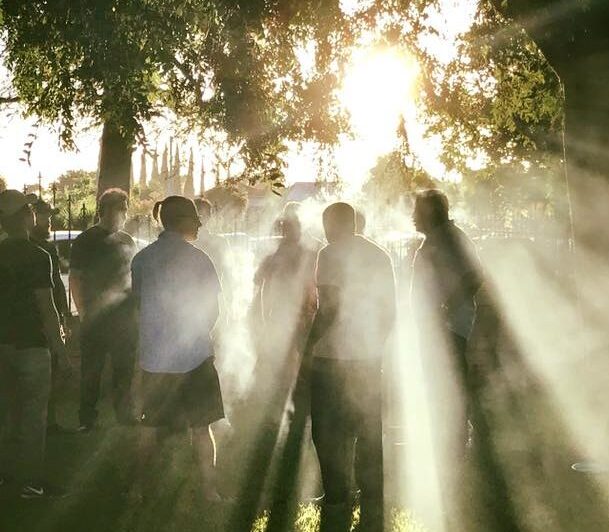
A men’s circle is usually a guided space where men gather to speak, listen, and reflect with honesty.
In practice, that can include sharing what is happening in life, speaking about stress, fatherhood, relationships, grief, identity, purpose, or emotional struggle, and being witnessed by other men without interruption, fixing, or judgement.
That does not mean every circle looks the same. Some are quiet and conversational. Others include breathwork, journalling, embodiment practices, or structured exercises that help men explore how they respond to challenge, intimacy, anger, shame, or responsibility.
What makes these spaces powerful is often their simplicity. Men discover they are not the only ones carrying pressure, confusion, sadness, or self-doubt. In that recognition, isolation begins to soften.
Brotherhood, in this sense, is not image or performance. It is presence.
What Is Men’s Work?
Men’s work is a broad term, but at its heart it refers to practices and spaces that support men in becoming more self-aware, emotionally honest, and grounded in their relationships with themselves and others.
Sometimes that takes the form of brotherhood circles or sharing groups. At other times it may include mentoring, ritual, nature-based practice, movement, breathwork, or guided reflection.
The purpose is not to create a perfect version of masculinity. It is not about correcting men as though they are inherently flawed.
Rather, men’s work creates room for growth. It invites men to understand the patterns they have inherited, the wounds they may be carrying, and the qualities they want to cultivate more consciously.
For some, that means learning to communicate more openly. For others, it means reconnecting with purpose, emotional literacy, healthy boundaries, or a deeper sense of integrity.
At its best, men’s work is not about identity as performance. It is about becoming more fully human.
Reimagining Masculinity With More Honesty
Many men today are searching for a form of masculinity that feels both strong and humane.
Older models often placed heavy emphasis on control, stoicism, and external achievement. Those qualities can sometimes appear admirable, but they can also leave little room for tenderness, uncertainty, or emotional truth. When masculinity becomes too narrow, both men and the people around them can feel the strain.
Conscious masculinity offers another possibility.
It suggests that strength and vulnerability are not opposites. A man can be dependable and emotionally honest. He can lead with clarity while remaining compassionate. He can take responsibility for his actions without hardening himself against feeling.
This reimagining of masculinity is not about discarding manhood, but deepening it.
It asks what becomes possible when men are supported to live with greater self-awareness, accountability, and care. When men are more connected to themselves, they are often better able to show up for partners, children, friends, and community.
Men’s Circles and Men’s Work at Soul Revolution Festival
At Soul Revolution Festival, men’s work is part of the wider journey of healing and conscious community.
Within the festival setting, these spaces offer men a chance to pause, speak openly, and reconnect with themselves away from the pressures of everyday roles and expectations.
What unites this work is a shared intention: to create spaces where men can be honest, supported, and challenged to grow in ways that feel real and lasting.
The Power of Brotherhood
When men come together in honesty, something important begins to shift.
The habit of silence loosens. Shame softens. The feeling of having to carry everything alone can begin to give way to support, perspective, and connection.
This is the quiet strength of men’s circles. Not posturing. Not performance. Presence.
In a world where many men have been taught to protect themselves through distance, brotherhood spaces can become places of healing. They remind men that openness is not weakness, and that being witnessed with compassion can be deeply strengthening.
When men heal, the effects do not stop with them. They reach into families, friendships, partnerships, and communities.