

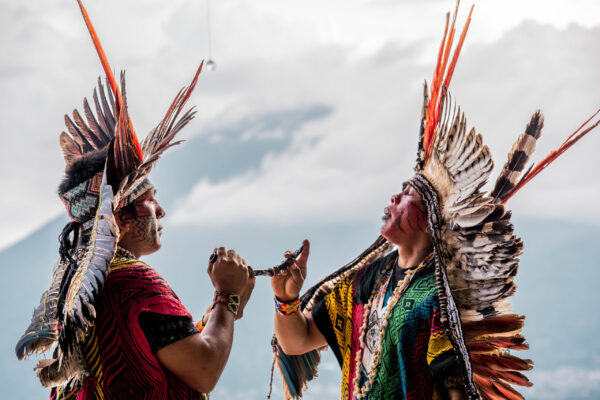
The Huni Kuin tribe, more respectfully described as the Huni Kuin people, are Indigenous communities of the western Amazon whose traditions are deeply rooted in song, ceremony, art, and relationship with the forest. For many readers encountering them for the first time, the most important thing to understand is that Huni Kuin culture is not a relic of the past. It is a living tradition carried forward through music, storytelling, visual art, and community practice.
Deep within the Amazon rainforest, the Huni Kuin have developed ways of life shaped by centuries of listening to the rhythms of the forest. Their songs carry ancestral memory, their art reflects visions and stories of the natural world, and their ceremonies create space for reflection, connection, and continuity within the community.
Today, some Huni Kuin representatives travel beyond their forest homeland to share aspects of their culture with audiences around the world. These encounters are best understood not as performances, but as opportunities for dialogue between traditions, a meeting between Indigenous knowledge and modern communities seeking deeper connection with nature, culture, and relationship.
At Soul Revolution Festival, the presence of Huni Kuin representatives offers attendees a chance to encounter a living cultural tradition rooted in music, ceremony, and artistic expression. Through shared experiences of song, art, and ritual, participants are invited to listen more closely to the wisdom of the forest and the voices that carry it.
Who Are the Huni Kuin People?
The Huni Kuin people live primarily in the western Amazon across parts of Brazil and Peru. Historically, they have also been referred to by the outsider name Kaxinawá, though many prefer their own name, Huni Kuin.
Their communities maintain a close relationship with the rainforest ecosystem that surrounds them. The forest provides food, medicine, shelter materials, and a source of cultural knowledge passed down across generations.
For the Huni Kuin, the forest is not simply an environment. It is a living presence — a teacher whose rhythms and cycles help shape daily life. Knowledge of plants, animals, and seasonal changes forms part of a sophisticated ecological understanding developed through long relationship with the land.
These teachings are often carried through oral storytelling, song, and ceremonial practice. Elders play an essential role in preserving language, knowledge, and community memory so that younger generations can continue to learn the traditions that sustain Huni Kuin life.
Today, while many Huni Kuin communities remain deeply connected to their ancestral territories, some leaders, artists, and musicians also travel internationally to share their culture and raise awareness about the protection of Indigenous lands and traditions.
Huni Kuin Music and Living Tradition
Huni Kuin music is central to cultural life.
Songs are not merely artistic expression or entertainment. They carry teachings, memories, and spiritual meaning that connect the community with ancestors, with the forest, and with one another. Passed from generation to generation, these songs often form part of ceremonial and communal gatherings where rhythm, voice, and repetition support reflection and presence.
In many Indigenous Amazon traditions, music is also a way of preserving knowledge. Through singing together, teachings about the natural world, community values, and spiritual understanding can be remembered and carried forward.
When Huni Kuin musicians share these traditions internationally, the intention is often one of cultural exchange and respect. The music becomes a bridge, inviting people to listen not only to sound, but to the worldview carried within it.
For festival audiences, this offers more than a performance. It offers a way of encountering Indigenous Amazon traditions through a living cultural form.
Ceremony and Cultural Context
Ceremony plays an important role in many Amazonian Indigenous traditions, offering space for reflection, prayer, and connection with the natural world.
Within some cultural settings, practices such as hapé ceremony may be shared with explanation and care. In its traditional context, hapé is a sacred preparation used within ceremonial frameworks and guided by people carrying the relevant cultural knowledge.
When traditions like this are introduced to wider audiences, context matters. They are best approached with humility, respect, and clear understanding that such practices belong to living Indigenous cultures rather than to modern wellness trends.
Huni Kuin Art and the Symbolism of Kené
Huni Kuin art is known for its striking geometric patterns and vivid colour.
These intricate visual designs, often referred to as kené, carry deep cultural significance. They are traditionally inspired by visions, stories, symbolism, and relationships with the natural and spiritual worlds.
Kené patterns can appear on textiles, body painting, ceremonial items, and handcrafted works. These designs are not simply decorative. They function as a visual language that expresses elements of identity, memory, and connection to animals, plants, ancestors, and the unseen dimensions of life.
For many Huni Kuin artists, creating these patterns is a form of storytelling. Art becomes a way of carrying culture forward while allowing tradition to remain alive and evolving.
Sharing this work with wider audiences offers an important opportunity to celebrate Indigenous creativity while supporting awareness of the traditions and territories from which it comes.
Why Indigenous Amazon Traditions Matter Today
As global conversations about ecology, sustainability, and cultural preservation become more urgent, there is growing recognition that Amazon rainforest Indigenous people hold valuable knowledge about relationship, reciprocity, and care for the living world.
The Huni Kuin offer one example of how culture, land, and spiritual practice can remain deeply intertwined. Their traditions remind modern audiences that knowledge is not only written in books or institutions. It is also held in songs, stories, patterns, ceremonies, and ways of living close to the Earth.
At the same time, interest in Indigenous cultures must be met with responsibility. Respectful cultural exchange means listening to Indigenous voices directly, honouring context, and avoiding the reduction of sacred traditions into novelty or spectacle.
This is part of what makes encounters with Huni Kuin culture meaningful. They can deepen appreciation not only for Indigenous wisdom, but also for the importance of protecting cultural and ecological diversity.
The Huni Kuin at Soul Revolution Festival
At Soul Revolution Festival, attendees will have the opportunity to experience aspects of Huni Kuin culture through music, ceremony, and artistic expression.
Participants may encounter traditional songs shared by Huni Kuin musicians, moments of ceremonial practice offered with care, and opportunities to learn about the symbolism within their artistic traditions.
These encounters are offered as cultural exchange rather than entertainment. They invite participants to listen, learn, and approach the experience with humility and curiosity.
In a gathering dedicated to consciousness, community, and reconnection with nature, the presence of Indigenous tradition-bearers offers an important reminder: many cultures have long understood the value of living in respectful relationship with the Earth.
Listening to the Forest
The traditions of the Huni Kuin people remind us that wisdom can be carried through song, ceremony, and art, and that these expressions often arise from deep relationship with the land.
As modern societies search for ways to reconnect with nature and with one another, Indigenous voices offer perspectives shaped by generations of cultural memory and care.
At Soul Revolution Festival, these voices are welcomed with respect and gratitude.
Join us and experience these traditions in a spirit of listening, learning, and cultural respect.